Revive Your Boat’s Performance: Master Propeller Repair Techniques Like a Pro!
Are you tired of sluggish boat performance and mysterious propeller issues? Imagine navigating the waters with confidence, knowing exactly how to diagnose and fix your boat’s most critical component. This comprehensive guide to propeller repair techniques will transform you from a frustrated boat owner to a savvy marine maintenance expert.
Understanding Propeller Repair Techniques: Your Ultimate Guide
Propellers are the unsung heroes of marine transportation, silently powering your vessel through challenging waters. Yet, they’re also incredibly vulnerable to damage that can compromise your boat’s performance and safety. Whether you’re a weekend sailor or a serious maritime enthusiast, mastering propeller repair techniques is crucial. Understanding the nuances of propeller dynamics, such as pitch, diameter, and blade count, can significantly impact your repair approach and overall boat performance.
Common Propeller Issues and How to Identify Them
Every boat owner should be a detective when it comes to propeller health. Here are the most critical issues to watch for:
Structural Damage Indicators
- Bent Blades: Look for uneven edges or visible warping. Bent blades can cause significant vibrations and reduce the efficiency of your boat’s propulsion system.
- Cavitation Burns: Pitted or eroded surface areas. Cavitation occurs when water vapor bubbles form and collapse on the propeller surface, leading to material loss.
- Cracks and Chips: Microscopic or visible fractures along blade edges. These can quickly worsen if not addressed, leading to more extensive damage.
Performance Warning Signs
- Unusual vibrations during navigation can indicate an imbalance or damage.
- Reduced boat speed might suggest that the propeller is not functioning optimally.
- Increased fuel consumption often results from a propeller that is not efficiently transferring engine power to the water.
- Difficulty maintaining consistent direction could be due to uneven blade wear or damage.
Pro Tip: Regular visual inspections can save you thousands in potential repair costs. Run your fingers gently along the propeller surface to detect even minor imperfections. Additionally, listening for unusual noises during operation can provide early warnings of propeller issues.
Step-by-Step Guide to Fixing Minor Propeller Damage
Preparation is Key
Before diving into repairs, gather these essential tools:
- Marine-grade epoxy for filling chips and cracks.
- Fine-grit sandpaper to smooth out repairs and restore the propeller’s surface.
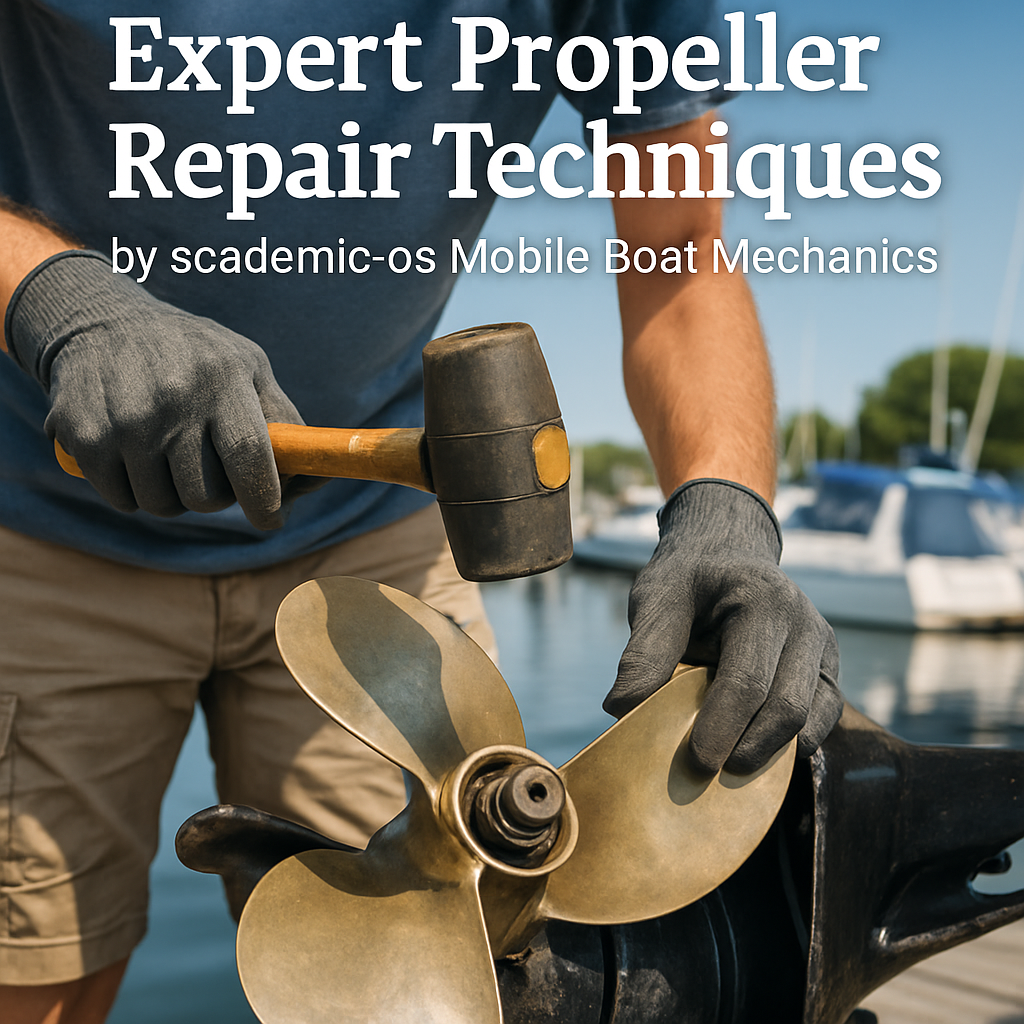
- Rubber mallet for gently correcting minor bends.
- Protective gloves to ensure safety during the repair process.
- Cleaning solution to remove any debris or marine growth.
- Precision measuring tools to ensure the propeller is balanced after repairs.
Repair Process
- Thorough Cleaning: Remove all marine growth and debris. This step is crucial for identifying the full extent of the damage.
- Detailed Inspection: Examine each blade carefully for signs of wear or damage.
- Minor Bend Correction: Use gentle mallet taps to realign bent blades. Ensure that the blade is returned to its original shape to maintain balance.
- Chip Repair: Apply marine epoxy to small damage areas. Allow the epoxy to cure fully before proceeding.
- Smoothing: Sand repaired sections for optimal performance. This step helps reduce drag and improve efficiency.
When to Call a Professional: Recognizing Major Damage
Not all propeller issues are DIY-friendly. Here are critical signs you need expert intervention:
Red Flags Requiring Professional Assessment
- Significant blade deformation that cannot be corrected with simple tools.
- Deep structural cracks that compromise the integrity of the propeller.
- Extensive corrosion that may require specialized treatment or replacement.
- Imbalanced propeller rotation that persists after attempted repairs.
- Repeated performance issues after attempted repairs, indicating underlying problems.
Professional mechanics have access to advanced tools and techniques, such as laser alignment and dynamic balancing, which can address complex issues more effectively.
The Mobile Boat Mechanic’s Role in Propeller Repairs
Mobile mechanics bring specialized expertise directly to your location. Their advantages include:
- On-site diagnostic capabilities that save time and effort.
- Specialized marine repair tools that are not typically available to the average boat owner.
- Immediate problem resolution, minimizing downtime and getting you back on the water quickly.
- Cost-effective solutions tailored to your specific needs.
- Minimal boat downtime, as repairs can often be completed on-site without the need for transport.
Mobile mechanics are particularly beneficial for addressing urgent issues or when access to a traditional repair shop is limited.
Preventative Maintenance: Prolonging Propeller Life
Strategic Maintenance Checklist
- Rinse with fresh water after saltwater use to prevent corrosion.
- Apply protective coatings to shield against environmental damage.
- Store in dry, covered areas to protect from the elements.
- Use sacrificial anodes to prevent electrolysis and corrosion.
- Conduct quarterly professional inspections to catch potential issues early.
Seasonal Maintenance Tips
- Spring: Comprehensive cleaning and inspection to prepare for the boating season.
- Summer: Regular performance checks to ensure optimal operation during peak usage.
- Fall: Thorough maintenance before winter storage to prevent damage during the off-season.
- Winter: Protective storage techniques to safeguard against harsh weather conditions.
Choosing the Right Tools and Materials
Essential Repair Kit Components
- Marine-grade epoxy for durable repairs.
- Precision measuring tools to ensure balance and alignment.
- Balancing equipment to maintain smooth operation.
- High-quality polishing compounds to restore the propeller’s finish.
- Protective sealants to extend the life of repairs.
Material Considerations
- Stainless steel propellers offer durability and resistance to corrosion.
- Aluminum alloy options provide a lightweight and cost-effective alternative.
- Composite material alternatives offer a balance of performance and durability.
Cost-Effective Strategies
- Invest in quality tools that will last and provide reliable results.
- Purchase professional-grade materials to ensure the best outcomes.
- Consider long-term maintenance costs when selecting materials and tools.
Advanced Considerations
Technology Integration
Modern propeller repair increasingly involves advanced diagnostic tools like:
- Digital measuring systems for precise assessments.
- 3D scanning technologies to create accurate models of the propeller.
- Computerized balance assessment to ensure optimal performance.
Environmental Factors
Consider how different water conditions impact propeller wear:
- Saltwater vs. freshwater environments can affect corrosion rates.
- Temperature variations may influence material properties.
- Sediment and debris exposure can lead to increased wear and damage.
Boat Repair Techniques
Boat Repair Techniques encompass a wide range of skills and knowledge necessary for maintaining a vessel’s overall health. From addressing propeller issues to tackling more complex repairs, understanding these techniques ensures your boat remains seaworthy. Whether you’re dealing with Hull Damage Repair or Repairing Boat Interiors, having a comprehensive approach to boat maintenance is essential. Each aspect of repair contributes to the longevity and performance of your vessel, making it crucial to be well-versed in these areas.
Final Thoughts
Mastering propeller repair techniques isn’t just about fixing problems—it’s about understanding your boat’s most critical performance component. With knowledge, proper tools, and a proactive approach, you’ll ensure smooth, efficient navigation for years to come. Regular maintenance and timely repairs can prevent minor issues from becoming major headaches, saving you time and money in the long run.
Remember: A well-maintained propeller is the difference between a good boating experience and an exceptional one. By investing in your skills and understanding the intricacies of propeller repair, you can enjoy the peace of mind that comes with knowing your boat is in top condition.
Disclaimer: While this guide provides comprehensive insights, always consult professional marine mechanics for complex repairs or when in doubt about your specific situation.